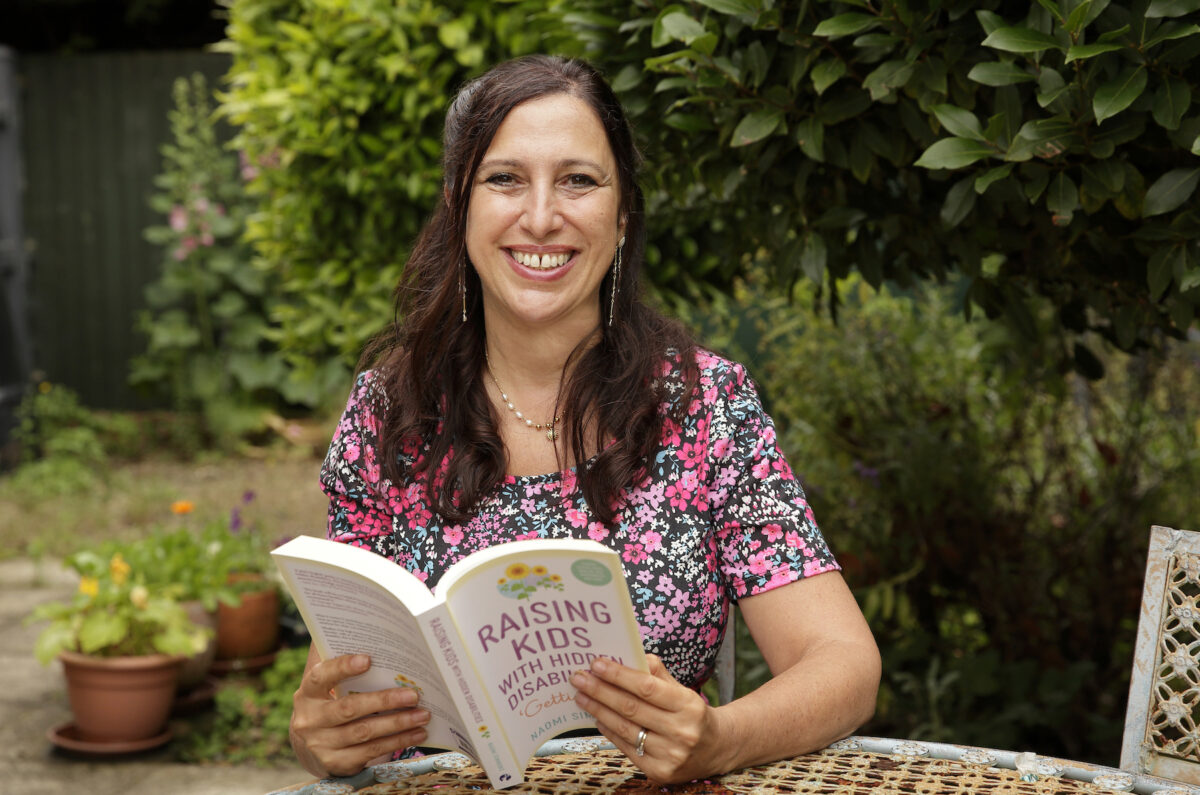
Why ‘normal’ parenting advice makes things worse for children with hidden disabilities

Maybe you have a child  with high functioning autism (Asperger’s), ADHD, dyslexia, ongoing anxiety or depression? Or suspect you might have? If so, there are many of us out there – one in eight according to latest estimates! You may have heard the term neurodivergence to refer to these conditions.

What you might not realise is that these are often hidden disabilities and have the same level of protection by law as more visible disabilities, such as kids with mobility issues who may need to use a wheelchair.

If your child has a hidden disability of this type, you are likely to have faced a fair bit of criticism and blame by others. This does not mean that you are to blame at all, in fact the opposite is likely to be true. 

These conditions are the result of a slightly different brain wiring and has nothing at all to do with bad or over indulgent parenting.

Sadly this is often misunderstood by others. As they cannot see the disability clearly, as they would a blind person with a white stick of guide dog, other people may be quick to jump to conclusions and judge the child and the parents for what may look like bad or naughty behaviour.

As we learn the specific skills we need to parent these children, we quickly discover that they may be very different from the ‘normal’ methods that we have learned.

‘Normal’ parenting usually deals with behaviour by using praise or rewards when they ‘get it right’ and consequences or punishments when our kids ‘get it wrong’. 

This can be very effective when the child is being wilful or using behaviour to get their own way or test your boundaries. In these situations it is usually possible to talk to the child, reason with them and they are able to hear and understand you.

This may not be the case if our child has a hidden disability, at least not all of the time. Because of their conditions, a whole range of what may look like ‘behaviours’ can occur that are not wilful and are not under their control.  During more extreme episodes, it is also likely that our child will not be able to hear or understand what we are saying to them at all.  

In these situations we are dealing with symptoms of their hidden disabilities, not bad behaviour and understanding the difference is critical in order to help the child to manage their conditions and lead a happy and productive life.

An example of where this confusion can take place is what may appear to be a temper tantrum. 

Most of us will have seen a child having a screaming fit in a supermarket. Often onlookers immediately judge the parent for not teaching the child that they cannot have everything they ask for. Most kids grow out of tantrums as they learn that it will not bring them what they are demanding and that it is not socially acceptable.

But what if the child is autistic? Or has another hidden disability that affects how their brain deals with extreme stimulation? In these situations, it is likely that the child is having an autistic meltdown and not a tantrum at all.

A meltdown is a chemical explosion that goes off inside the child’s head when they become too overwhelmed to cope. The brains of children with hidden disabilities are particularly sensitive to noise, crowds, bright lights, stress and unexpected situations. 

When they are feeling calm, they may be able to cope with these things to some extent. But when they are stressed, tired or too much is going on at once, their brains become overwhelmed and shut down. This is the body’s way of protecting itself from overload and is not wilful and absolutely not bad behaviour.

This shutting down can be outward or inward. When it is outward, the child has a meltdown, which can look very much like a tantrum. When it is inward, the child may become silent, vacant and hide away, as if locked into themselves.  When a child is in this condition, we cannot have a meaningful conversation with them and they may not be able to speak or hear us at all.

So while a child having a ‘normal’ tantrum may respond do a good talking to and perhaps some consequences or rewards, can you imagine how this would feel to an autistic child having a meltdown? Or a frightened child locked away in their room having a shutdown?

When we understand that a flood of anxiety hormones is what triggers the meltdown, we can easily see how using ‘normal’ parenting techniques can increase that anxiety. In addition to their brain going into shutdown, they are additionally trying to make sense of what we may be saying and what consequences we are imposing. 

And there is more. When a child is being treated as ‘naughty’ in these situations, they can feel shame and even self hate for a situation that they cannot change without help. These are not good traits for a happy and productive life.

This is why ‘normal’ parenting can be like throwing petrol onto a fire and both meltdowns and shutdowns can become infinitely worse, fed by their fuel, anxiety.

Can you imagine if other medical symptoms were treated as naughtiness? Would we punish short sighted children for not being able to see properly and reward them when they strain to see without their eye glasses? Treating meltdowns this way is no different and just need to adjust our mindset a little.

In my experience, what works is to cut the fuel supply of the meltdown which means removing the anxiety load fast. This gives the body time to clear the chemical imbalance and the brain the chance to recover so that communication with our child can be restored.  

When we understand what is happening to our children’s brains, there is also a great deal we can do to prevent these meltdowns from happening at all.

Through personal experience and it has taken me a lifetime to overcome the shame and embarrassment of how I ‘behave’ when I am having a chemical storm due to my neurodivergence. 

Secondly, while researching my book Raising Kids With Hidden Disabilities: Getting It, I spoke to hundreds of young people with hidden disabilities who are thriving and are great examples and role models for a successful and happy life.

Learning to understand their needs and how to meet them was the number one magic bullet. And not far behind that was replacing shame with pride in who they are and what they can achieve.

And parenting my own children gave me the opportunity to put these ideas into practice and to learn from my own failures, and successes!

Other hidden disability symptoms that need to be approached in a similar way include self harm, fussy eating, hitting out, obsessions, inability to focus or sit still among others.

Often these are an indication that the child’s needs are not being met. Perhaps they are attending a school where their symptoms are being treated as bad behaviour!

When we learn to decode our children, it becomes clear that what looks like a behaviour may actually a non-verbal way of communicating something else – that the child is frightened, overwhelmed, feels out of control, is over stimulated and as is often the case with ADHD, under stimulated.

For example, our children may only eat a few things. This can mean that our child is feeling unsafe in life and therefore only known and ‘trusted’ food feels safe and gives them a sense of control. If this is the case, coaxing or even forcing them to eat food that the child considers ‘unsafe’ can make their anxiety worse, creating a downward spiral of their hidden disabilities symptoms.  Instead we can use techniques to lower anxiety around new foods.

When we learn to decode effectively, a new and effective approach to parenting becomes very clear and obvious. This is an approach based on ‘getting it’, rather than ‘judging it’.

Here is an example from one of my children, who was diagnosed with both dyslexia and ADHD whilst in primary school.  

School told me that I had to accept that my child was low ability, in fact too low ability to sit SATS. I knew deep inside that this wasn’t the case and that with the right understanding and support, this child could excel.

Luckily with the help of the techniques in my book, I learned how to decode my children and identify what was needed in order for them to learn and focus. This meant I had to amend how I parented and the school had to put some adjustments in place.

My apparently ‘low ability’ child now has a first class degree from one of the top universities in the world and has exceeded any expectation I could have dreamed of.

With effective decoding, symptoms become controllable and meltdowns and shutdowns become events that are rare. 

When they do happen, it usually means that something in the child’s environment is ‘wrong’ and needs to be amended.  This is very different from saying that the child themself is ‘wrong’ and needs to be punished.

Decoding has also helped me personally to manage my own hidden disability needs.  Until I understood the difference between behaviour and symptoms, I used to judge myself very harshly. When I became overwhelmed in particular situations, I would try to ‘pull myself together’ in vain and doing so would make my anxiety and my symptoms worse.

I now work with my needs and ensure that they are met. This allows me to lead a happy and very productive life. Understanding, rather than judgement, is at the core of this success.

How to decode and respond to our child’s hidden disability symptoms is explained in detail in Raising Kids With Hidden Disabilities: Getting It. The book also gives guidance on how best to advocate for our child at school and with other organisations.

What this gives us is hope for our children and can give our children hope for themselves. Nothing can feel more healing that being understood, heard and accepted for who we are, regardless of any hidden disability needs we may have. 

  1. What motivated you to write Raising Kids With Hidden Disabilities: Getting It?

When I was faced with the challenges of my kid’s hidden disabilities I was clueless about what to do. 

Everyone and their dog had an opinion on what I should be doing differently. The people with the strongest opinions often had the least personal experience of hidden disabilities and it is not surprising that nothing was helping. 

When I was looking for books there seemed to be only two types available: books written by doctors from a medical point of view, or books written by parents who wanted to share their stories of despair and difficulties. 

Neither of these gave me what I wanted, which was practical understandings and strategies for day-to-day challenges, and most importantly of all, hope.

My research helped me find the hope I was looking for and family life transformed as I was able to put these new understandings to daily use. 

As I wanted other parents to benefit from everything I had found out, I wrote the book I longed to find all those years ago.

2.  How does it differ from other parenting books on the subject?

My book is based on real lived experience. The advice comes from others who have walked this walk and have genuine hope to offer. 

It is written in down-to-earth language and is aimed at parents like us rather than doctors and professionals. 

Also, other books tend to be about a single diagnosis, for example, only about autism or ADHD. This is not of great help when we consider that 80% of kids with hidden disabilities have a number of different diagnoses. So I put together an approach that works in any possible scenario, including the many kids who are having difficulties but do not have any diagnosis.

3. How much research went into your new book?

Over a period of about eight years, I interviewed hundreds of people, mostly young adults who have hidden disabilities themselves. I chose those who were living happy and productive lives and I wanted to know what in their childhoods had most helped them the most to get to such a good place. 

Knowing about what parents can do to get it right is the first step in giving us hope.

I also spoke to parents who had successfully brought up thriving kids with hidden disabilities. It is a privilege to be able to share their tips and experiences.

Extra insights came from some brilliant specialist clinicians and paediatricians, who supported this project and added their clinical expertise to help provide as comprehensive and practical a guide as possible on how best to raise kids with hidden disabilities.

4. Why is the sub-title ‘Getting It’?

When I talk to parents about their experiences with teachers, family and friends, probably the most common thing I hear is, ‘They just don’t get it’. 

‘Getting it’ here means really appreciating the difference between behaviours and hidden disability symptoms and genuinely understanding our children’s needs.

And when we meet someone who does ‘get it’ it can feel like we have won the jackpot! This is why I want as many people to ‘get it’ as possible and why I chose the term as subtitle for the book. We all have a role to play.

5. What one key piece of advice would you give to parents of kids with hidden disabilities? 

Our children’s challenges and their strengths are two sides of the same coin. They come together in a package. So that they are not demoralised by the challenges, it is very important to keep pointing out the strengths. And the more their needs are met, the more their strengths will shine through!

An example with ADHD is that impulsivity is often considered to be a problem. But this same impulsivity is also a super strength when we think of it as enabling our child to make fast and effective decisions under pressure. 

With high functioning autism, a passion for a specialist subject can be considered a limitation. But at the same time, it can result in an unrivalled  level of expertise in that area and the potential innovation and career success this can bring.

6. You are recognised as one of the UK’s bestselling authors of all time. When you started your writing career did you think you would one day achieve this status, and how does it feel?

Not at all. I was a struggling single parent and just wanted to provide for my family. Writing was something that came naturally to me and gave me the flexibility I needed to work around my children’s needs. 

Looking back, I think my achievement in part is due to the determination and that comes from my own hidden disabilities. Despite challenges, I had the passion, vision and staying power to see my projects through. I now realise my autism helped me with this, especially as by working from home I was able to meet most of my workplace needs that may have been a problem in a conventional office.

For me the satisfaction is all about enjoying and following my passion and it is certainly gratifying to see my faith in myself come to fruition. 
Discrimination Against Hidden Disabilities Must End

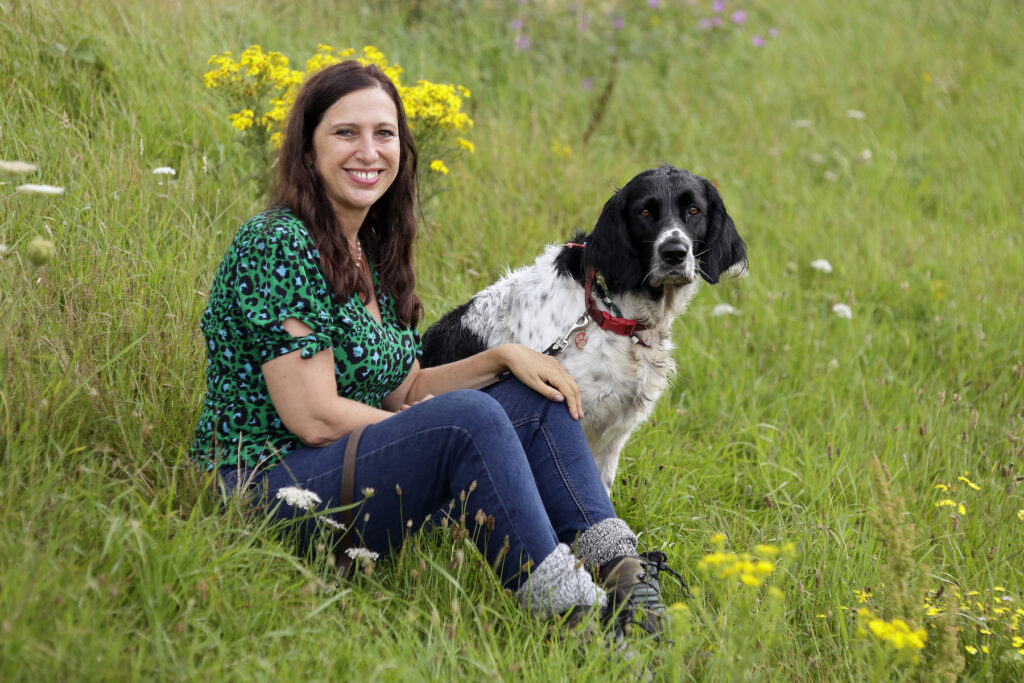
Author Naomi Simmons with Ruby, Large Munsterlander

Can you imagine if a person using a wheelchair was told that they just need to ‘try harder’ to get themselves up a flight of stairs? 

Or if a child with visual impairment was told to use all their might to strain their eyes to read at school rather than allow the reasonable adjustment of permitting the use of eye glasses?  

Such an infringement of disability rights would be unthinkable. 

Yet this is exactly this is what is happening to about one in eight of our population every day. I am talking about adults and children with hidden disabilities.

Don’t get me wrong, there has been a huge amount of progress in disability rights in the last fifty years. We now take for granted that buildings will have access ramps, disabled toilets and even signs in Braile.

The Equality Act 2010 has been very helpful in supporting this progress, along with many years of campaigning to raise awareness of disability rights.

It is estimated that at least 10 per cent of the population benefits from adjustments for mobility disabilities. What these people have in common is that most of their difficulties are visible. By this I mean that there are outward signs of what the person’s needs may be, such as a wheelchair, a white stick or a bodily sign.

Now is the time to extend this progress to the many, many talented and hardworking members of our communities whose disability needs are equally severe, equally valid, but are not visible and are rarely understood or acknowledged. Hidden disabilities are estimated to affect at least one in eight of the population. That is a lot of people, a lot of talent and a lot of lost potential. 

The Equality Act does not discriminate between visible and hidden disabilities. The definition of disability it uses is about recognising the person’s needs regardless of a person’s diagnosis. 

If the person has difficulties that are ongoing and create a substantial impact on day-to day life, they are disabled according to the law and entitled to reasonable adjustments by workplaces, schools and colleges. Disability ramps and toilets are examples of reasonable adjustments for visible disabilities.

There are many types of hidden disabilities, but in my experience it is people with ongoing conditions such high functioning autism (Aspergers), ADHD, OCD, anxiety and mood disorders that face the highest level of discrimination under the terms of the Equality Act. These are people often referred to as neurodivergent.

We need, as a society to now ensure that reasonable adjustments are applied equally to all disabilities. Although the law does not discriminate between visible and hidden disabilities, sadly society still does. 

People with visible disabilities are generally met with understanding and a willingness to help. Sadly people with a hidden disability often experience the opposite – either blame and judgement, or equally unhelpfully, a denial that their needs ‘really’ exist.

There is still a level of stigma around hidden disabilities that makes it really difficult for us to talk openly about our needs. This makes it difficult for others to listen, really listen to what reasonable adjustments can legitimately be put into place to enable us to fully participate in education, the workplace and everything life has to offer. 

While researching my book Raising Kids With Hidden Disabilities: Getting It, it became apparent that the experiences my family were facing were being shared by thousands of others. 

Frequently hidden disability symptoms such as for example severe anxiety or hyperactivity are mistaken for wilful or bad behaviour and treated as such with judgment and the use of ‘punishment’. This is often in the face of strong medical evidence about the person’s condition and how it can manifest itself.

There is still a prevalent view that hidden disability needs can somehow be overcome by the person ‘trying harder’ or ‘pulling themselves together’.

Hearing this, the person may blame themselves and wonder if perhaps they are not trying hard enough to overcome their disability symptoms by brute willpower alone. 

However, if the same thing was said to a person with a visible disability there would be an uproar.  

It is not surprising that 80 percent of parents of children with a hidden disability state that they have been blamed for their children’s difficulties and we can well imagine the effect of this on the children themselves as they grow up.

And just as with visible disabilities, there is no evidence that hidden disabilities are caused by bad parenting. What we do know is that these are complex conditions caused by slightly different brain wiring and that genetics plays a critical role. 

Again, the blaming of a person with a visible disability or their parents for their impairments would be rightly met with shock and incredulity.  Can you imagine if the parent of a child in a wheelchair were fined because their child was unable to access the school due to the lack of a ramp? 

In contrast, blaming and fining parents and children commonly occurs when a child is unable to attend  school where their hidden disability needs are not being met.

This situation can only be described as hypocrisy.

An example of a need that is common among a range of hidden disabilities is sensory overload and I will use myself as an example. 

When I am exposed to loud noises, crowds, too much visual stimulation and changing expectations I become overwhelmed and my ability to think and function shuts down. In fact it feels like an explosion has gone off inside my head. No amount of willpower or ‘pulling myself together’ allows me to overcome this, just as a person with mobility problems cannot force themselves to walk.

My disability ‘need’ here is the reasonable adjustment of being able to work in a quiet environment, with plenty of recovery time to allow me to stay calm and with a minimum of unexpected dramas. When I am able to meet this  need, I am a ‘super producer’, which in my case includes writing hundreds of best-selling educational books that are used around the world. Recognising the adjustments I need, I am also able to enjoy relationships and hobbies as well as the challenges and joys of raising my own children.

However, if these needs are denied, it is a different story. Should I be obliged to work in a noisy open-plan office, I may just about cope for a day or two. However all of my energy would be spent on ‘getting through the day’ rather than on actually producing any work. This is because I would be operating on a survival ‘fight or flight’ mode rather than with an open, productive state of mind.

Without my needs being recognised and met I would probably have joined the 80 per cent of people on the autism spectrum who are currently unemployed or underemployed according to latest figures. 

Helping us to work in an environment that meets our needs not only supports the economy but also saves the state billions in welfare benefits. Neurodivergent people are often the thinkers and innovators and much of the technology we use daily has been produced by proudly neurodivergent people in Silicon Valley. 

A simple attitude shift can untap this potential and talent. Yes we need effective services too, sadly lacking at this time, but in my mind everything starts with awareness and that means we need to stop the hypocrisy of only recognising needs that we can see.

For me to say ‘I cannot work in an open-plan office due to my sensory needs’ is no different from a person using a wheelchair requesting an office with a door that they can get through.

This is also a common issue for children who are struggling with sensory overload in busy, loud and overwhelming school environments, along with demands being placed on them that they cannot meet while in a shutdown or overwhelmed state.

For this reason we can say that adults and children with hidden disabilities are suffering from a double discrimination. Not only do we have all the challenges of the disability itself, but we also have the additional burden of the disability being denied or ignored because it is hidden or not immediately obvious.

I would like it to become completely normalised to both talk about our needs and ask about the needs of others. 

So when a child is too anxious to go into school, rather than try to drag them into the classroom we may ask, ‘What does this child need to feel safe at school?” 

In the workplace, if a person has ADHD, we can ask ‘What do you need to help you stay focussed on task?’

In recent times it has become easier to talk openly about mental health and this is a very helpful development. We now need to extend this openness to those with hidden disabilities. 

This is how we challenge stigma. Neurodivergent people are not broken and there is nothing ‘wrong’ with us. We simply have some different needs that if met would allow us to thrive.

For these conversations to take place we need far more awareness and understanding. 

At present only 14% of UK secondary school teachers have received any training at all on hidden disabilities. This needs to change if schools are going to be healthy and enriching environments for our children.

The shameful figure of the 80 percent unemployed figure needs to be met with the question, ‘what reasonable adjustments do people need to meet their potential, to the benefit of us all, regardless of whether their disabilities are visible or hidden?’

This would be positive and empowering for not only the people concerned, but also for society as a whole.

How did you come to learn that children with hidden disabilities are facing significant levels of discrimination?

This came from personal experience with my own children. I have bright, talented and highly motivated children who due to some differing needs, required ‘reasonable adjustments’ from their schools. 

Despite documented medical and diagnostic evidence, we were continually told that their needs were due to laziness, bad behaviour or not trying hard enough. I was also repeatedly accused of ‘causing’ my children’s difficulties. Interestingly, I was not accused of causing their many strengths. 

It just really struck me, would people be saying this about more visible needs, such as a child needing to use a wheelchair? Would a parent be accused of ‘causing’ a child’s short sightedness? A disability is a disability, so this felt very hypocritical to me. 

For this reason I wanted to learn more in order to better advocate for my children to give them the best chance of reaching their potential.

Was this the reason for writing your book?

Partly. The more I learnt about reasonable adjustments, it became clear that a shift in awareness about hidden disabilities needs to start in the home. 

We simply cannot parent our children with hidden disabilities in the same way as neurotypical children and we need to put reasonable adjustments in place in how we raise them.

When I looked for books on how to do this, I found only material of a medical nature or personal accounts of difficulties. I needed strategies that worked for my children and more than anything I needed hope. So I decided to research and write the book I so needed to read at that time in the hope that other parents would benefit from what I had found out. 

What can be the long term consequences of discrimination for children with hidden disabilities?

Many parents have told me that schools are rejecting diagnoses such as Asperger’s and ADHD because they are against ‘labelling’ a child. Although this motive may be honorable, it can result in them also denying the needs that the diagnosis highlights and thereby the possibility of meeting those need. It is somewhat paradoxical that the same organisations may then go on to label our child as ‘lazy’, ‘naughty’, ‘low achiever’, ‘too quiet’, ‘unfocussed’ or ‘bad’. So much for being against labelling!

I have never come across diagnoses of visible disabilities being dismissed in this way. A child who requires crutches to walk is unlikely to be labelled as  ‘lazy’. Where disabilities are visible, the correct diagnostic label tends to be accepted without question. This is another example of the hypocrisy I describe.

The consequence of this for children is catastrophic. They may internalise the negative moral labels they hear every day such as ‘low achiever’ and ‘scatterbrained’. This affects their self esteem and crushes any dreams or aspirations they may have, dreams that could perfectly well become reality with the right support in place.

By contrast, what is the potential outcome if children’s special needs are met?

When their needs are acknowledged and met, their unique gifts and talents are then able to flourish. It is not until this happens that we are able to see our child’s potential. As for outcomes, these can exceed even our wildest hopes, at least that was the case for my children and for me. The dyslexic child of mine who was apparently too ‘low ability’ to read and write went on to get a first class degree at a top university.

Why do you think the Equality Act is failing to protect children with hidden disabilities from such discrimination?

Before researching this book I, like many other parents, had absolutely no idea that my and my children’s difficulties could be considered ‘disabilities’ and that the Equality Act included us. 

Finding this out was a game changer and provided me with the ammunition, along with diagnostic reports, to enable me to better advocate for my children and do what I could to confront this discrimination and get their needs met.

The more people use the Equality Act to challenge this double discrimination, and do so as publicly as possible, the more the hypocricy surrounding hidden disability will be challenged and hopefully laid to rest.

What progress would you like to see in the next 10 years?

Ten years ago it was uncommon to ask people about their dietary needs. Now it would be uncommon not to.  Being vegetarian or gluten intolerant was somewhat stigmatised and often laughed at. Now it is not.

I would like to see this same progress with hidden disabilities. Just as we may adjust what food we give someone who has a nut allergy, I hope that in time everyone will naturally make reasonable adjustments to address people’s hidden disability needs. I expect that this will be without judgement and that there will cease to be any distinction made by organisations between disability needs that are visible and those that are hidden. 

__________________________________

Extra questions from your list that are probably slightly beyond the scope of this piece but use at your discretion.

You also say that parents of children with hidden disabilities are discriminated against. Can you explain more?

Parents of children with all disabilities struggle. However, research has shown that parents of children with hidden disabilities have levels of stress hormones that are comparable to combat soldiers. When questioned, most attributed this to the daily judgement and blame they face as well as the ongoing fight for services, benefits and adjustments for their children.  

A lovely example of this was shared by a friend with a young autistic son who is severely triggered by the sensory overload of being in a supermarket, often resulting in spectacular meltdowns. When this happens, my friend is usually subjected to very judgmental comments by both the public and staff resulting in her feeling blamed and shamed. Then, following foot surgery, her son needed to temporarily use a wheelchair at the supermarket. As before, this would provoke the usual meltdowns. However, the fact that the child was in a wheelchair produced a completely different response. People smiled and offered support, help and compassion. Same child, same symptom, completely different response from others if there was a visible symbol of disability. 

What sorts of reasonable adjustments could be offered in schools for hidden disabilities?

Schools tend to address educational special needs, for example if a child needs some extra help with maths or literacy.  However, with hidden disabilities the needs are much broader than for example, catching up with number bonds, as they affect the whole experience of being in school. Some children find school far too overwhelming and need quiet sensory places in which to decompress. Some may need a shortened school day and when pressure builds up, homework amnesties and even recovery days. Others may benefit from a hybrid of school and remote learning. Children with ADHD may need different stimulation and their energy directed towards their special interests. If we start with the premise, ‘what does this child need in order to succeed?’ a whole range of options become available. Many children with hidden disabilities are also bullied in school and it really is not surprising that it feels like such a hostile and unsafe environment to so many.

What role do employers have to play in supporting employees, especially young employees with hidden disabilities?

Recognising neurodiversity as an asset! We all have different skills, strengths and challenges and being open to neurodiversity opens up the skill pool to huge reserves of talent.  People with ADHD, with their passion and fast thinking minds, can be the drivers of getting things done in an organisation. People with autism spectrum can also bring unrivalled passion, vision and attention to detail. For these skills to be harnessed, employers will also need to recognise their employees needs and offer as much flexibility as required to meet them. This may mean allowing remote working and the avoidance of rush hour travel if this is a needed for the person. Some people may need extra help with organising their diaries and as with schools, others need a quiet space to decompress when they are feeling overwhelmed. Everyone’s needs are different, so simply asking what these needs are, without judgment, and perhaps making a few suggested reasonable adjustments should sort out any concerns.