By Naomi Simmons
Can you imagine if a person using a wheelchair was told that they just need to ‘try harder’ to get themselves up a flight of stairs?
Or if a child with visual impairment was told to use all their might to strain their eyes to read at school rather than allow the reasonable adjustment of permitting the use of eye glasses?
Such an infringement of disability rights would be unthinkable.
Yet this is exactly this is what is happening to about one in eight of our population every day. I am talking about adults and children with hidden disabilities.
Don’t get me wrong, there has been a huge amount of progress in disability rights in the last fifty years. We now take for granted that buildings will have access ramps, disabled toilets and even signs in Braile.
The Equality Act 2010 has been very helpful in supporting this progress, along with many years of campaigning to raise awareness of disability rights.
It is estimated that at least 10 per cent of the population benefits from adjustments for mobility disabilities. What these people have in common is that most of their difficulties are visible. By this I mean that there are outward signs of what the person’s needs may be, such as a wheelchair, a white stick or a bodily sign.
Now is the time to extend this progress to the many, many talented and hardworking members of our communities whose disability needs are equally severe, equally valid, but are not visible and are rarely understood or acknowledged. Hidden disabilities are estimated to affect at least one in eight of the population. That is a lot of people, a lot of talent and a lot of lost potential.
The Equality Act does not discriminate between visible and hidden disabilities. The definition of disability it uses is about recognising the person’s needs regardless of a person’s diagnosis.
If the person has difficulties that are ongoing and create a substantial impact on day-to day life, they are disabled according to the law and entitled to reasonable adjustments by workplaces, schools and colleges. Disability ramps and toilets are examples of reasonable adjustments for visible disabilities.
There are many types of hidden disabilities, but in my experience it is people with ongoing conditions such high functioning autism (Aspergers), ADHD, OCD, anxiety and mood disorders that face the highest level of discrimination under the terms of the Equality Act. These are people often referred to as neurodivergent.
We need, as a society to now ensure that reasonable adjustments are applied equally to all disabilities. Although the law does not discriminate between visible and hidden disabilities, sadly society still does.
People with visible disabilities are generally met with understanding and a willingness to help. Sadly people with a hidden disability often experience the opposite – either blame and judgement, or equally unhelpfully, a denial that their needs ‘really’ exist.
There is still a level of stigma around hidden disabilities that makes it really difficult for us to talk openly about our needs. This makes it difficult for others to listen, really listen to what reasonable adjustments can legitimately be put into place to enable us to fully participate in education, the workplace and everything life has to offer.
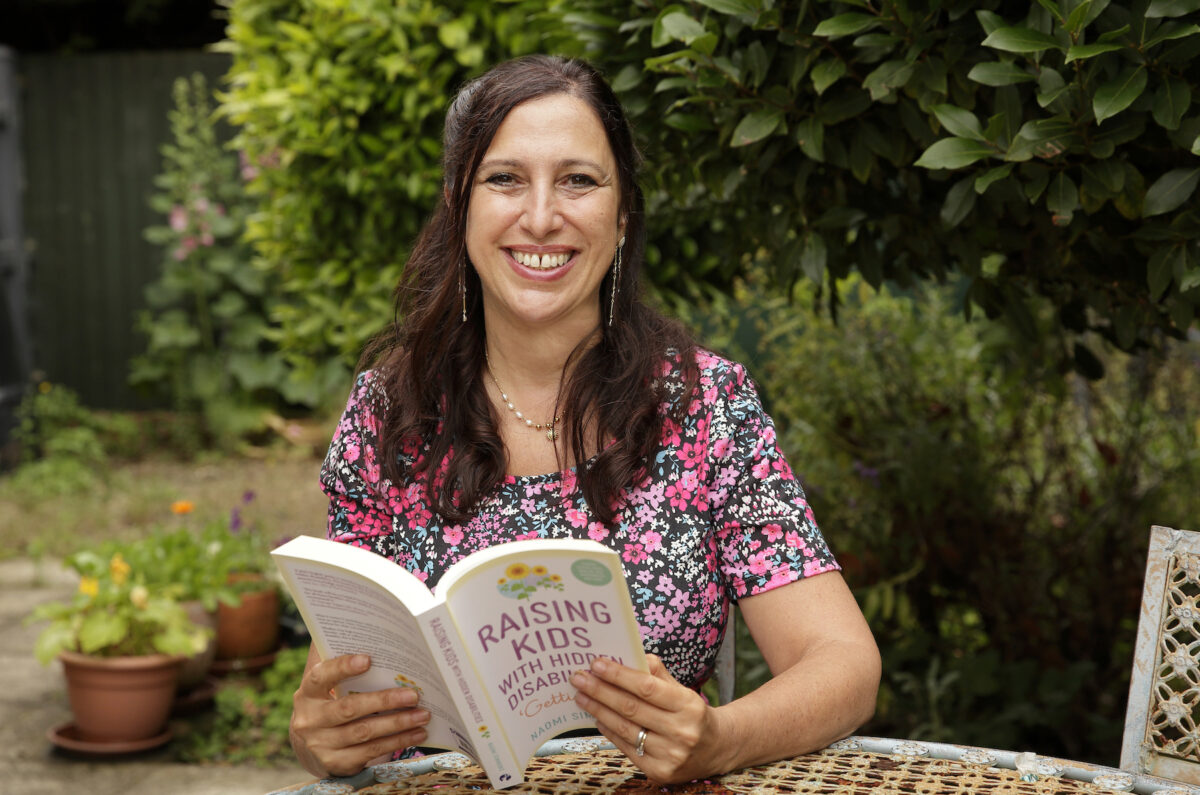
While researching my book Raising Kids With Hidden Disabilities: Getting It, it became apparent that the experiences my family were facing were being shared by thousands of others.
Frequently hidden disability symptoms such as for example severe anxiety or hyperactivity are mistaken for wilful or bad behaviour and treated as such with judgment and the use of ‘punishment’. This is often in the face of strong medical evidence about the person’s condition and how it can manifest itself.
There is still a prevalent view that hidden disability needs can somehow be overcome by the person ‘trying harder’ or ‘pulling themselves together’.
Hearing this, the person may blame themselves and wonder if perhaps they are not trying hard enough to overcome their disability symptoms by brute willpower alone.
However, if the same thing was said to a person with a visible disability there would be an uproar.
It is not surprising that 80 percent of parents of children with a hidden disability state that they have been blamed for their children’s difficulties and we can well imagine the effect of this on the children themselves as they grow up.
And just as with visible disabilities, there is no evidence that hidden disabilities are caused by bad parenting. What we do know is that these are complex conditions caused by slightly different brain wiring and that genetics plays a critical role.
Again, the blaming of a person with a visible disability or their parents for their impairments would be rightly met with shock and incredulity. Can you imagine if the parent of a child in a wheelchair were fined because their child was unable to access the school due to the lack of a ramp?
In contrast, blaming and fining parents and children commonly occurs when a child is unable to attend school where their hidden disability needs are not being met.
This situation can only be described as hypocrisy.
Living with a hidden disability
An example of a need that is common among a range of hidden disabilities is sensory overload and I will use myself as an example.
When I am exposed to loud noises, crowds, too much visual stimulation and changing expectations I become overwhelmed and my ability to think and function shuts down. In fact it feels like an explosion has gone off inside my head. No amount of willpower or ‘pulling myself together’ allows me to overcome this, just as a person with mobility problems cannot force themselves to walk.
My disability ‘need’ here is the reasonable adjustment of being able to work in a quiet environment, with plenty of recovery time to allow me to stay calm and with a minimum of unexpected dramas. When I am able to meet this need, I am a ‘super producer’, which in my case includes writing hundreds of best-selling educational books that are used around the world. Recognising the adjustments I need, I am also able to enjoy relationships and hobbies as well as the challenges and joys of raising my own children.
However, if these needs are denied, it is a different story. Should I be obliged to work in a noisy open-plan office, I may just about cope for a day or two. However all of my energy would be spent on ‘getting through the day’ rather than on actually producing any work. This is because I would be operating on a survival ‘fight or flight’ mode rather than with an open, productive state of mind.
Without my needs being recognised and met I would probably have joined the 80 per cent of people on the autism spectrum who are currently unemployed or underemployed according to latest figures.
Helping us to work in an environment that meets our needs not only supports the economy but also saves the state billions in welfare benefits. Neurodivergent people are often the thinkers and innovators and much of the technology we use daily has been produced by proudly neurodivergent people in Silicon Valley.
A simple attitude shift can untap this potential and talent. Yes we need effective services too, sadly lacking at this time, but in my mind everything starts with awareness and that means we need to stop the hypocrisy of only recognising needs that we can see.
For me to say ‘I cannot work in an open-plan office due to my sensory needs’ is no different from a person using a wheelchair requesting an office with a door that they can get through.
This is also a common issue for children who are struggling with sensory overload in busy, loud and overwhelming school environments, along with demands being placed on them that they cannot meet while in a shutdown or overwhelmed state.
For this reason we can say that adults and children with hidden disabilities are suffering from a double discrimination. Not only do we have all the challenges of the disability itself, but we also have the additional burden of the disability being denied or ignored because it is hidden or not immediately obvious.
So what needs to change?
I would like it to become completely normalised to both talk about our needs and ask about the needs of others.
So when a child is too anxious to go into school, rather than try to drag them into the classroom we may ask, ‘What does this child need to feel safe at school?”
In the workplace, if a person has ADHD, we can ask ‘What do you need to help you stay focussed on task?’
In recent times it has become easier to talk openly about mental health and this is a very helpful development. We now need to extend this openness to those with hidden disabilities.
This is how we challenge stigma. Neurodivergent people are not broken and there is nothing ‘wrong’ with us. We simply have some different needs that if met would allow us to thrive.
For these conversations to take place we need far more awareness and understanding.
At present only 14% of UK secondary school teachers have received any training at all on hidden disabilities. This needs to change if schools are going to be healthy and enriching environments for our children.
The shameful figure of the 80 percent unemployed figure needs to be met with the question, ‘what reasonable adjustments do people need to meet their potential, to the benefit of us all, regardless of whether their disabilities are visible or hidden?’
This would be positive and empowering for not only the people concerned, but also for society as a whole.
Q&A with Naomi
How did you come to learn that children with hidden disabilities are facing significant levels of discrimination?
This came from personal experience with my own children. I have bright, talented and highly motivated children who due to some differing needs, required ‘reasonable adjustments’ from their schools.
Despite documented medical and diagnostic evidence, we were continually told that their needs were due to laziness, bad behaviour or not trying hard enough. I was also repeatedly accused of ‘causing’ my children’s difficulties. Interestingly, I was not accused of causing their many strengths.
It just really struck me, would people be saying this about more visible needs, such as a child needing to use a wheelchair? Would a parent be accused of ‘causing’ a child’s short sightedness? A disability is a disability, so this felt very hypocritical to me.
For this reason I wanted to learn more in order to better advocate for my children to give them the best chance of reaching their potential.
Was this the reason for writing your book?
Partly. The more I learnt about reasonable adjustments, it became clear that a shift in awareness about hidden disabilities needs to start in the home.
We simply cannot parent our children with hidden disabilities in the same way as neurotypical children and we need to put reasonable adjustments in place in how we raise them.
When I looked for books on how to do this, I found only material of a medical nature or personal accounts of difficulties. I needed strategies that worked for my children and more than anything I needed hope. So I decided to research and write the book I so needed to read at that time in the hope that other parents would benefit from what I had found out.
What can be the long term consequences of discrimination for children with hidden disabilities?
Many parents have told me that schools are rejecting diagnoses such as Asperger’s and ADHD because they are against ‘labelling’ a child. Although this motive may be honorable, it can result in them also denying the needs that the diagnosis highlights and thereby the possibility of meeting those need. It is somewhat paradoxical that the same organisations may then go on to label our child as ‘lazy’, ‘naughty’, ‘low achiever’, ‘too quiet’, ‘unfocussed’ or ‘bad’. So much for being against labelling!
I have never come across diagnoses of visible disabilities being dismissed in this way. A child who requires crutches to walk is unlikely to be labelled as ‘lazy’. Where disabilities are visible, the correct diagnostic label tends to be accepted without question. This is another example of the hypocrisy I describe.
The consequence of this for children is catastrophic. They may internalise the negative moral labels they hear every day such as ‘low achiever’ and ‘scatterbrained’. This affects their self esteem and crushes any dreams or aspirations they may have, dreams that could perfectly well become reality with the right support in place.
By contrast, what is the potential outcome if children’s special needs are met?
When their needs are acknowledged and met, their unique gifts and talents are then able to flourish. It is not until this happens that we are able to see our child’s potential. As for outcomes, these can exceed even our wildest hopes, at least that was the case for my children and for me. The dyslexic child of mine who was apparently too ‘low ability’ to read and write went on to get a first class degree at a top university.
Why do you think the Equality Act is failing to protect children with hidden disabilities from such discrimination?
Before researching this book I, like many other parents, had absolutely no idea that my and my children’s difficulties could be considered ‘disabilities’ and that the Equality Act included us.
Finding this out was a game changer and provided me with the ammunition, along with diagnostic reports, to enable me to better advocate for my children and do what I could to confront this discrimination and get their needs met.
The more people use the Equality Act to challenge this double discrimination, and do so as publicly as possible, the more the hypocricy surrounding hidden disability will be challenged and hopefully laid to rest.
What progress would you like to see in the next 10 years?
Ten years ago it was uncommon to ask people about their dietary needs. Now it would be uncommon not to. Being vegetarian or gluten intolerant was somewhat stigmatised and often laughed at. Now it is not.
I would like to see this same progress with hidden disabilities. Just as we may adjust what food we give someone who has a nut allergy, I hope that in time everyone will naturally make reasonable adjustments to address people’s hidden disability needs. I expect that this will be without judgement and that there will cease to be any distinction made by organisations between disability needs that are visible and those that are hidden.
__________________________________
Extra questions from your list that are probably slightly beyond the scope of this piece but use at your discretion.
You also say that parents of children with hidden disabilities are discriminated against. Can you explain more?
Parents of children with all disabilities struggle. However, research has shown that parents of children with hidden disabilities have levels of stress hormones that are comparable to combat soldiers. When questioned, most attributed this to the daily judgement and blame they face as well as the ongoing fight for services, benefits and adjustments for their children.
A lovely example of this was shared by a friend with a young autistic son who is severely triggered by the sensory overload of being in a supermarket, often resulting in spectacular meltdowns. When this happens, my friend is usually subjected to very judgmental comments by both the public and staff resulting in her feeling blamed and shamed. Then, following foot surgery, her son needed to temporarily use a wheelchair at the supermarket. As before, this would provoke the usual meltdowns. However, the fact that the child was in a wheelchair produced a completely different response. People smiled and offered support, help and compassion. Same child, same symptom, completely different response from others if there was a visible symbol of disability.
What sorts of reasonable adjustments could be offered in schools for hidden disabilities?
Schools tend to address educational special needs, for example if a child needs some extra help with maths or literacy. However, with hidden disabilities the needs are much broader than for example, catching up with number bonds, as they affect the whole experience of being in school. Some children find school far too overwhelming and need quiet sensory places in which to decompress. Some may need a shortened school day and when pressure builds up, homework amnesties and even recovery days. Others may benefit from a hybrid of school and remote learning. Children with ADHD may need different stimulation and their energy directed towards their special interests. If we start with the premise, ‘what does this child need in order to succeed?’ a whole range of options become available. Many children with hidden disabilities are also bullied in school and it really is not surprising that it feels like such a hostile and unsafe environment to so many.
What role do employers have to play in supporting employees, especially young employees with hidden disabilities?
Recognising neurodiversity as an asset! We all have different skills, strengths and challenges and being open to neurodiversity opens up the skill pool to huge reserves of talent. People with ADHD, with their passion and fast thinking minds, can be the drivers of getting things done in an organisation. People with autism spectrum can also bring unrivalled passion, vision and attention to detail. For these skills to be harnessed, employers will also need to recognise their employees needs and offer as much flexibility as required to meet them. This may mean allowing remote working and the avoidance of rush hour travel if this is a needed for the person. Some people may need extra help with organising their diaries and as with schools, others need a quiet space to decompress when they are feeling overwhelmed. Everyone’s needs are different, so simply asking what these needs are, without judgment, and perhaps making a few suggested reasonable adjustments should sort out any concerns.